Who is it for?
The parathyroid glands produce the hormone (PTH) that regulates calcium. A benign overgrowth (adenoma) in one gland oversecretes the hormone and raises blood calcium, which can cause bone loss, kidney stones and fatigue. The standard treatment is surgery.
Ablation is an alternative considered in selected patients — when surgery is high-risk, when previous neck surgery makes reoperation difficult, or when the patient declines surgery. Suitability requires the adenoma to be clearly localized on imaging and the diagnosis confirmed biochemically (PTH, calcium); the decision is made together with the endocrinology team.
How it is done — step by step
Confirmation
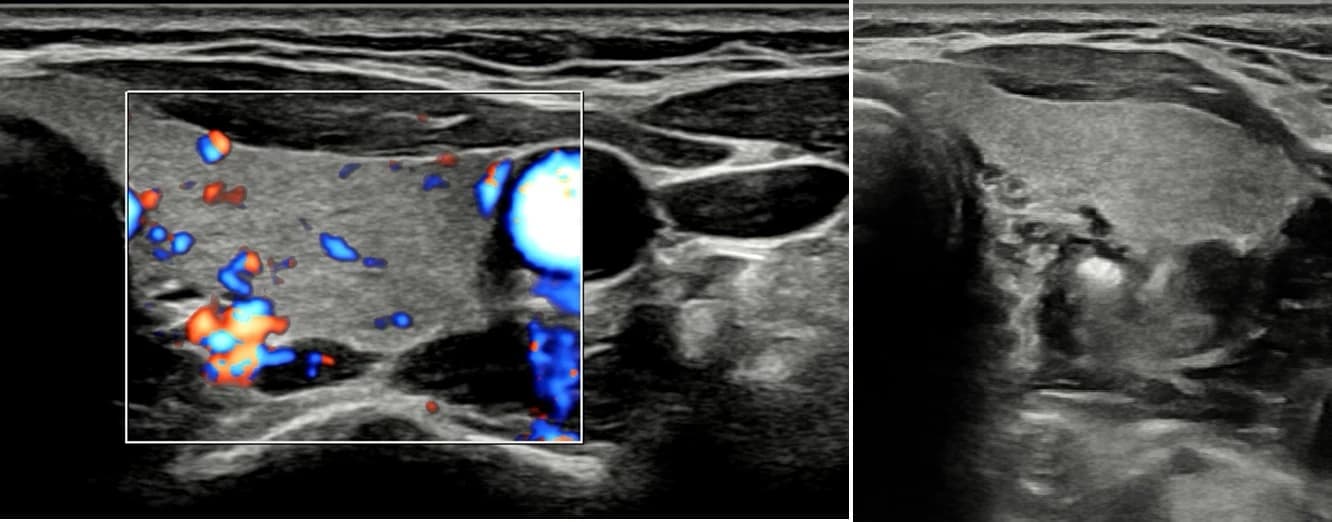
The adenoma’s location is confirmed with ultrasound (plus additional imaging when needed); blood values are reviewed.
Local anaesthesia and protection
The neck is numbed. When needed, fluid is instilled around the gland to create a safety margin from neighbouring structures (hydrodissection).
Ablation
A thin needle-electrode is placed into the adenoma under ultrasound guidance; the tissue is inactivated with controlled radiofrequency heating, watched live.
Check
The area is imaged once more; only a needle mark remains on the skin.
What to expect on the day
The procedure is performed awake under local anaesthesia; your voice is checked at intervals. It usually takes 30–60 minutes.
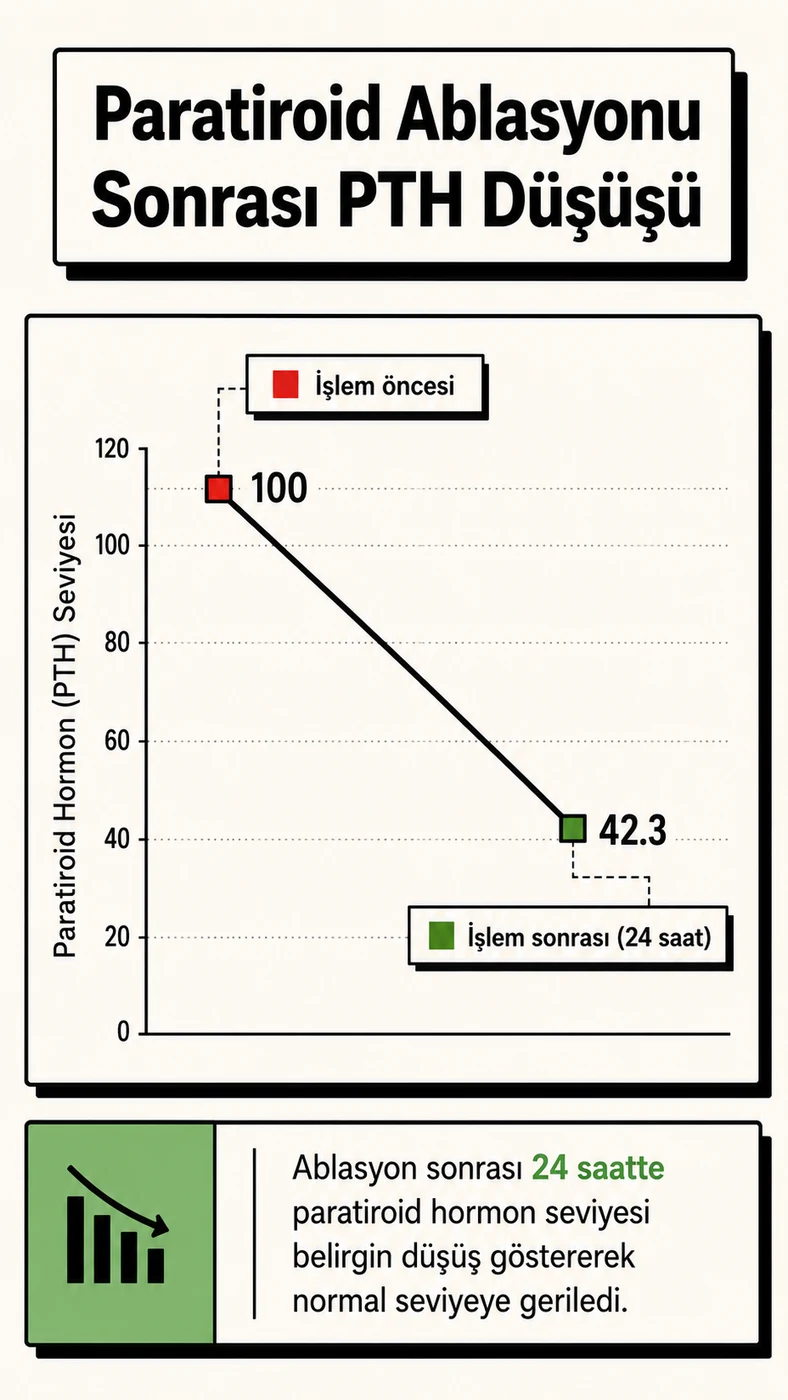
You are observed for a few hours afterwards; calcium and PTH are monitored. Most patients go home the same day.
Risks and Limitations
Because the nerve of the vocal cord lies nearby, temporary hoarseness can rarely occur. Calcium may dip temporarily after the procedure, so blood values are followed closely and supplemented if needed. Bleeding and infection are rare.
Limitations to know: surgery remains the treatment with the most established long-term results; ablation is an alternative for selected patients. If adenoma tissue is not fully inactivated, hormone excess may persist or recur — biochemical follow-up is therefore essential.
Recovery and follow-up
Most patients return to daily life the next day; mild neck tenderness for a few days is expected.
Follow-up runs on two tracks: PTH and calcium by blood tests, and shrinkage of the adenoma by ultrasound. Intervals are planned with the endocrinology team.
Scientific References
- 5. Uluslararası Primer Hiperparatiroidi Çalıştayı kılavuzları (Bilezikian JP ve ark., J Bone Miner Res, 2022)
- Dernek kaynakları: CIRSE (Avrupa Girişimsel Radyoloji Derneği) · SIR (ABD) · SIO (Society of Interventional Oncology) · TGRD (Türk Girişimsel Radyoloji Derneği)
Frequently Asked Questions
Does it replace surgery?
Surgery is the standard treatment. Ablation is an alternative for selected patients — high surgical risk, difficult reoperation or patient preference — assessed together with endocrinology.
Will my hormone balance normalize immediately?
The goal is to inactivate the overproducing tissue; improvement is confirmed by follow-up blood tests, and further treatment is planned if needed.
Is hoarseness permanent?
Voice change is rare and usually temporary. Checking your voice during the procedure helps minimize this risk.
What does a calcium dip mean?
Once the overactive gland is silenced, calcium may fall temporarily and cause tingling. It is a known, manageable situation — monitored and supported with calcium if needed.
Will there be a scar?
No incision, so no surgical scar — only the needle entry point on the skin.
What if it recurs?
If hormone excess persists on follow-up, ablation can be repeated or surgery reconsidered; the decision is made together.
The information on this page is for general education; diagnosis and treatment decisions are made individually after clinical evaluation.