
When is it used?
Penile Doppler ultrasound is the key objective test showing whether erectile dysfunction has a vascular cause. It distinguishes arterial insufficiency from venous leak — the distinction on which correct treatment selection depends.
It is also used for pre-surgical vascular assessment in Peyronie’s disease, for differentiating types of prolonged erection (priapism), and after penile trauma. The examination is planned in coordination with the urology team.
How the examination is done
Briefing and preparation
The exam takes place in a private, quiet room with strict attention to privacy; every step is explained beforehand.
Medication
To measure the vascular response, a vasodilating agent is injected into the corpus cavernosum with a very fine needle. Alprostadil (prostaglandin E1) is the agent most commonly used and recommended in current guidelines; some centres use papaverine-based combinations. The injection takes seconds.
Doppler measurements
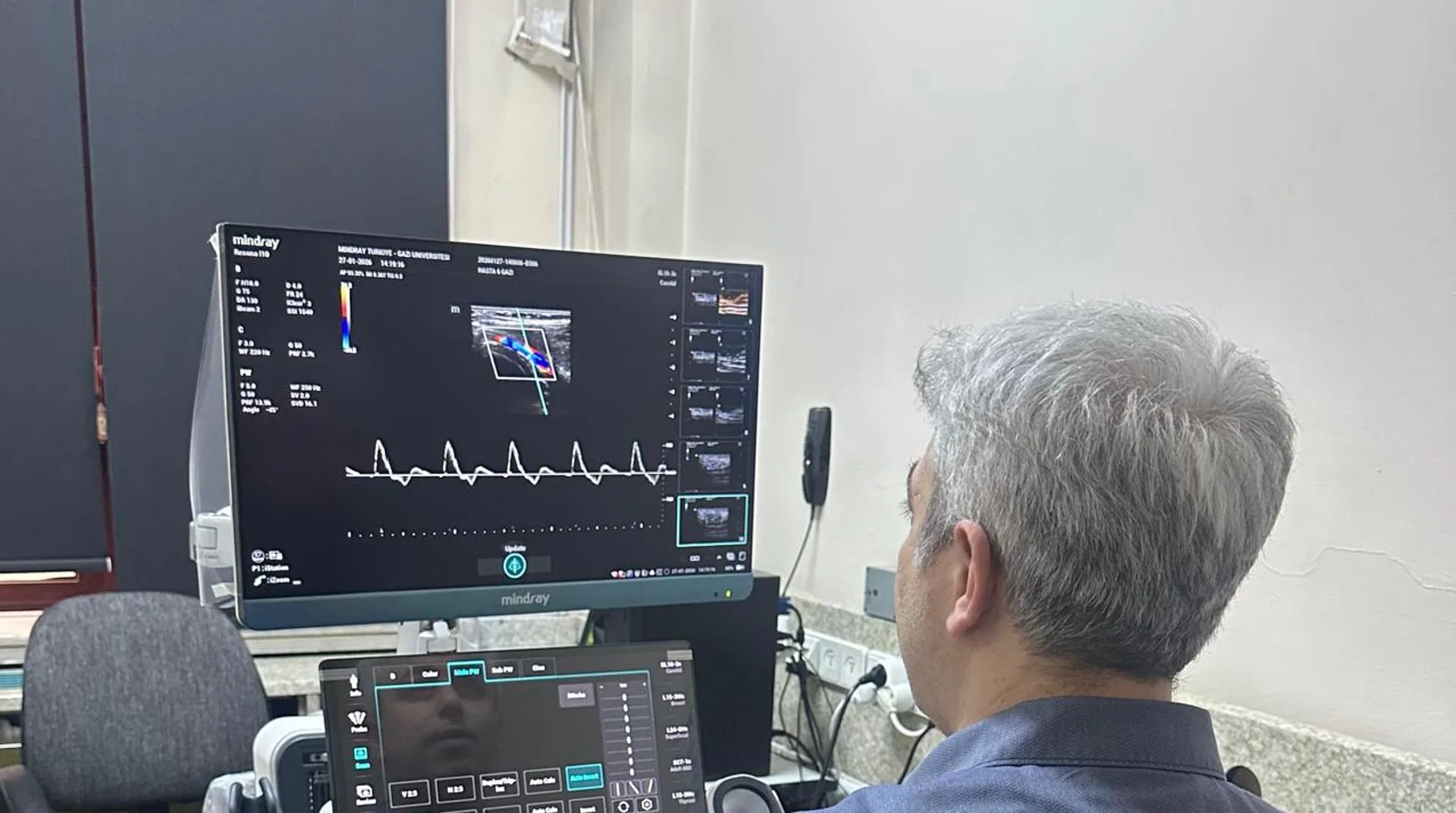
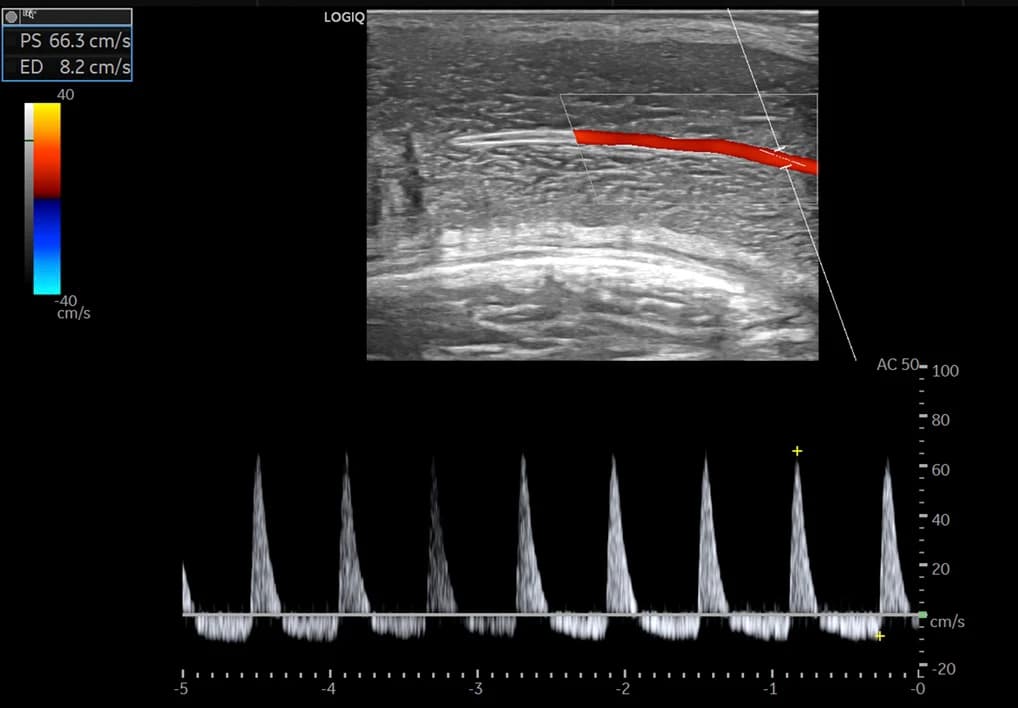
Cavernosal artery flow velocities (systolic and diastolic) are measured with color and spectral Doppler at intervals over about 20–30 minutes.
Assessment
The flow curves are interpreted together: arterial response, venous occlusion and response timing are reported.
On the day
No fasting is needed; tell us in advance if you use blood thinners. The visit takes 30–45 minutes in total.
A short observation follows; once the erection has fully subsided you return to your day. Driving is fine.
Risks and Limitations
Mild soreness or a small bruise at the injection site may occur and resolves by itself. The main point to know is medication-related prolonged erection (priapism): rare, but requiring urgent treatment if it exceeds four hours — which is why detumescence is observed after the exam and clear instructions are given.
A limit: anxiety can suppress the vascular response; an additional dose or a repeat examination may then be needed. Results are always interpreted together with the clinical picture and the urology team.
Result and report
The report is ready the same day; flow velocities and the vascular response are documented numerically.
The roadmap is drawn with your urology team: medication, lifestyle measures or advanced treatments are built on this objective data.
Scientific References
- EAU — Cinsel ve Üreme Sağlığı Kılavuzu (Salonia A ve ark., European Urology)
- AUA — Erektil Disfonksiyon Kılavuzu (Burnett AL ve ark., J Urol, 2018)
Frequently Asked Questions
Is it painful?
The agent is injected with a very fine needle in seconds; most patients describe no more than a brief sting.
How is privacy maintained?
The exam is performed in a private room, with only the necessary staff, and each step explained in advance.
Is the medication safe?
Alprostadil (prostaglandin E1) is the agent most commonly recommended by current international guidelines (EAU, AUA) for this test; papaverine-based combinations are also used, though the risk of prolonged erection is lower with alprostadil. Because of this rare risk, detumescence is observed after the test and clear guidance is provided.
How long does it take?
Plan 30–45 minutes in total, including the timed measurements.
What will the result tell me?
It shows objectively whether the problem stems from arterial insufficiency, venous leak or non-vascular causes — treatment is selected accordingly.
Do I need to stop my medications?
Usually not; specific instructions for blood thinners and erectile medications are given when booking.
The information on this page is for general education; diagnosis and treatment decisions are made individually after clinical evaluation.