When is it used?
Ultrasound is the first-line imaging method for the thyroid, abdominal organs (liver, gallbladder, pancreas, kidneys, spleen), breast, neck, superficial tissues and vessels. It uses no radiation and is safe in pregnancy and childhood.
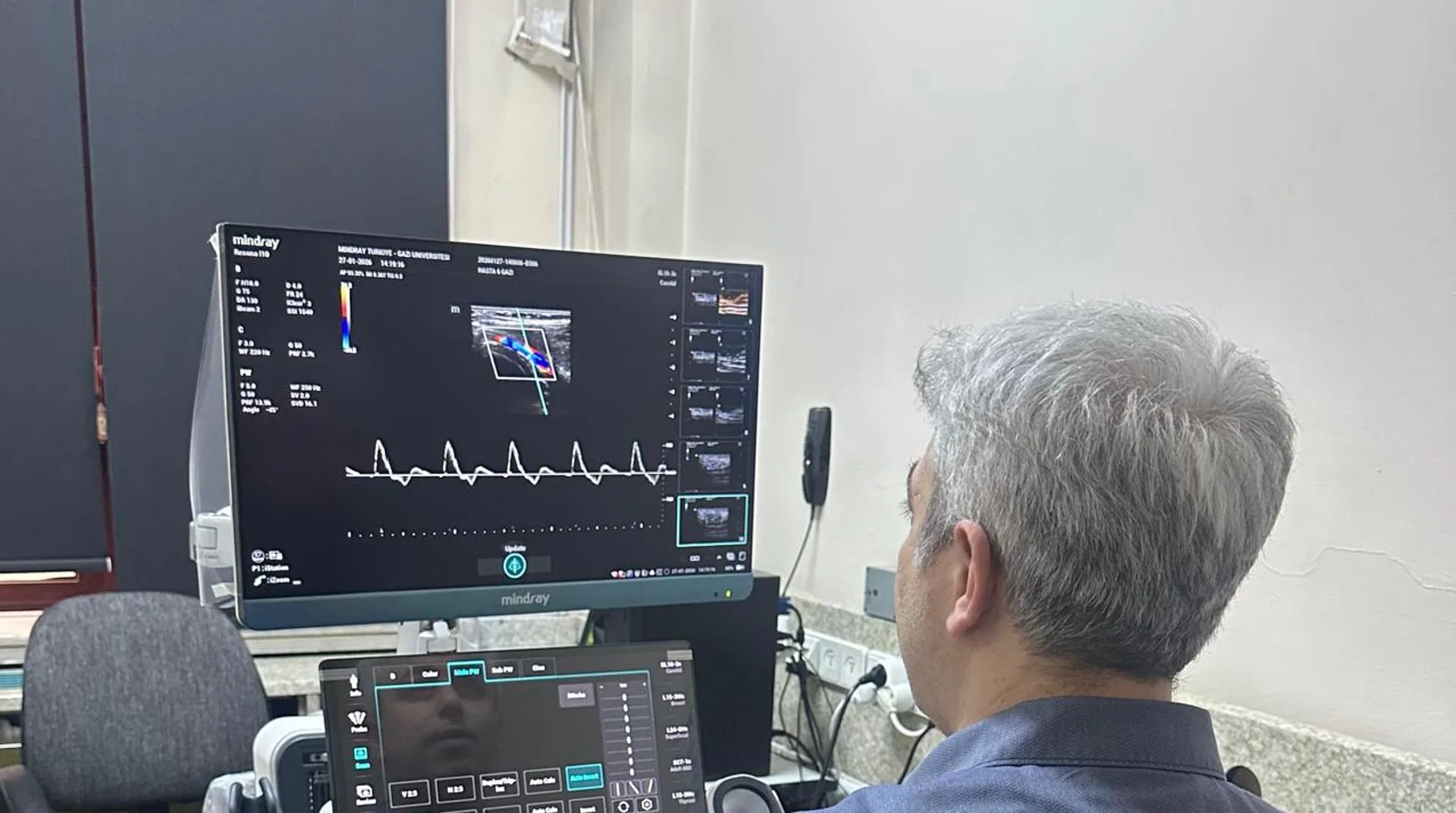
Doppler assesses blood flow in vessels; advanced techniques such as elastography measure tissue stiffness (for example, fat and fibrosis assessment in the liver). A physician-performed, question-driven examination is what gives the result its value — ultrasound’s accuracy is directly tied to the experience of the hand performing it.
How the examination is done
Preparation
Any preparation specific to the region (such as fasting for the abdomen) is communicated at booking.
Gel and probe
Water-based gel is applied and the probe glides over the area. The examination is completely painless.
Targeted assessment
Organs are scanned systematically; Doppler and, when needed, elastography measurements are added according to the clinical question.
Result
Findings are explained to you during the exam; a written report and images are prepared.
On the day
A few hours of fasting is usually requested for abdominal exams; thyroid, breast and superficial studies need no preparation.
The examination usually takes 15–30 minutes; you return to your day immediately afterwards.
Limitations of the Method
Ultrasound has no known harm; it uses no radiation and can be repeated as often as needed.
It has limits too: bowel gas and deep location can restrict visibility of some regions, and some questions require complementary CT or MRI. In that case you are guided correctly — ultrasound is not the single answer to every question, but the first and most practical answer to most.
Result and report
The report and images are prepared the same day, written in clear language.
Based on the findings, the roadmap — surveillance interval, need for biopsy or referral to the relevant specialty — is clarified together with you.
Scientific References
- AIUM — Uygulama parametreleri (American Institute of Ultrasound in Medicine)
- EFSUMB — Karaciğer elastografisi kılavuz ve önerileri (Dietrich CF ve ark., Ultraschall in der Medizin, 2017)
Frequently Asked Questions
Is ultrasound harmful?
No — it uses no radiation, is safe in pregnancy and childhood, and can be repeated when needed.
What is Doppler and why is it requested?
An ultrasound technique showing blood flow; vessel narrowing, occlusions and organ perfusion are assessed this way.
What is elastography for?
It measures tissue stiffness; particularly for liver fat and fibrosis assessment, information that can reduce the need for biopsy.
Do I need to fast?
Usually yes for abdominal exams (a few hours); not for thyroid, breast and superficial studies. Clear instructions are given at booking.
Who performs the examination?
A radiologist physician performs it around your clinical question — ultrasound’s value is directly tied to the experience of the performing hand.
Will I learn the result immediately?
Yes — findings are explained during the exam, and the written report is ready the same day.
The information on this page is for general education; diagnosis and treatment decisions are made individually after clinical evaluation.